
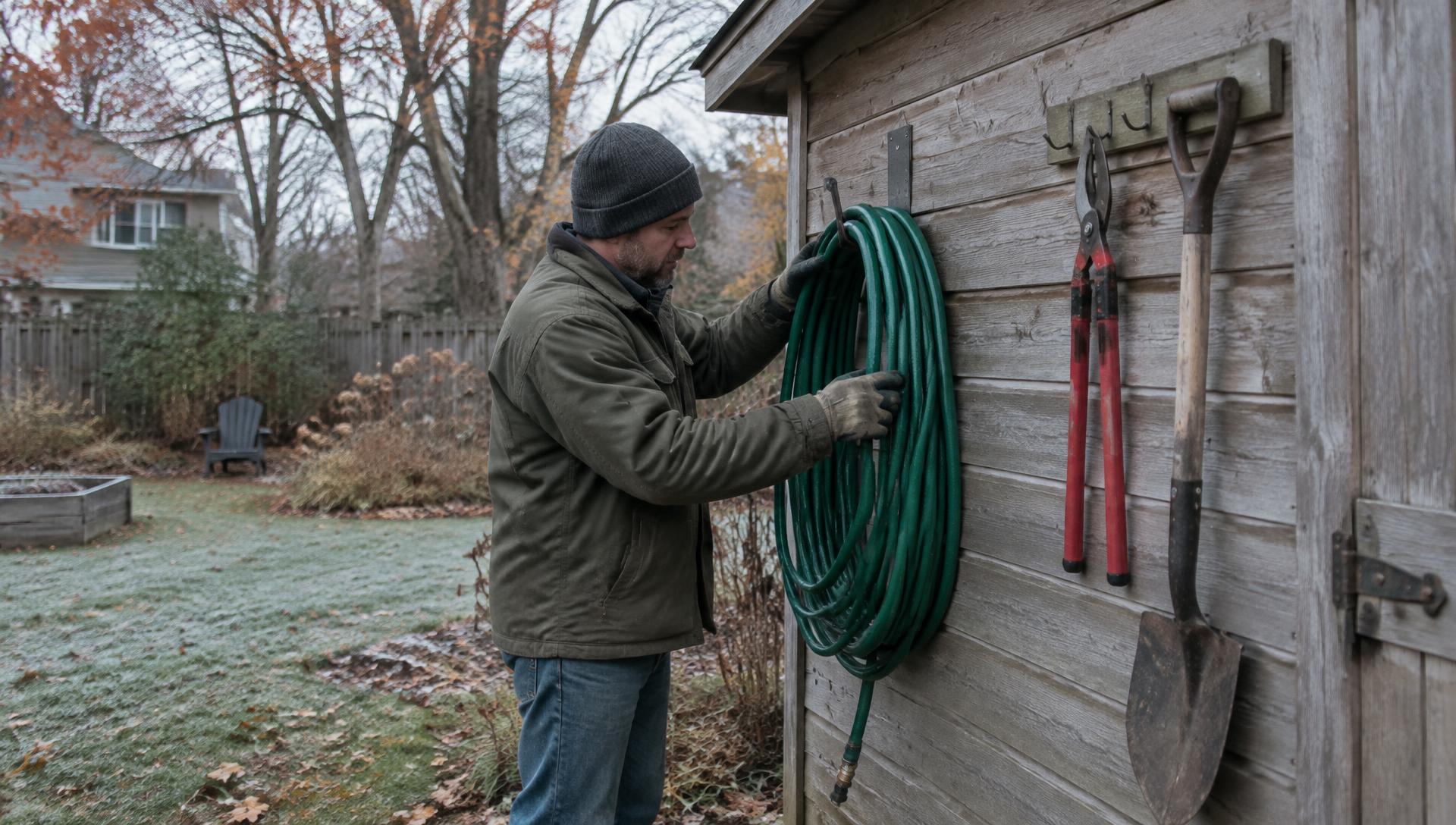
A Canadian winter is hard on gardens and even harder on gear left outside. Water freezes inside hoses, steel rusts under wet snow, and bare soil heaves through freeze-thaw cycles. An afternoon of fall prep saves money, protects your plants and makes spring start smoothly.
When to Start
| Region | Typical window |
|---|---|
| Prairies & North | Late September – mid October |
| Ontario & Quebec | Mid October – early November |
| Atlantic Canada | Late October – mid November |
| Coastal B.C. | November (mainly for heavy rain and occasional frost) |
Aim to finish before the ground freezes solid. Light frosts are your signal to begin.
1. Hoses, Nozzles and Outdoor Taps
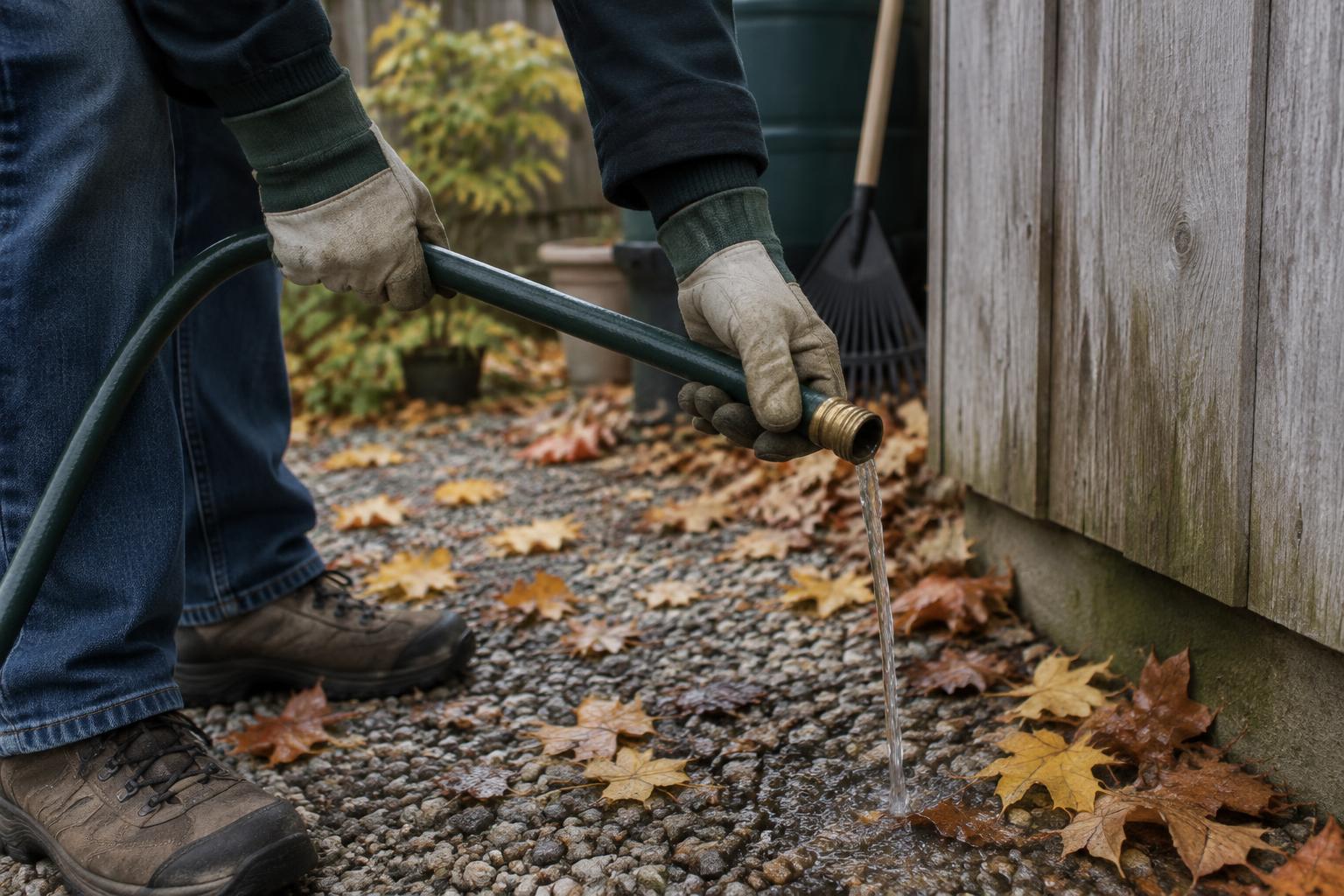
- Disconnect hoses from every outdoor tap.
- Shut off the indoor valve feeding each outdoor tap, then open the tap outside to drain it.
- Stretch hoses out on a slope or lift them hand-over-hand to empty all water.
- Coil loosely — tight coils can kink cold hoses — and store indoors.
- Bring spray nozzles, wands, sprinklers and brass fittings inside; trapped water cracks them.
2. Pruners, Shears and Cutting Tools
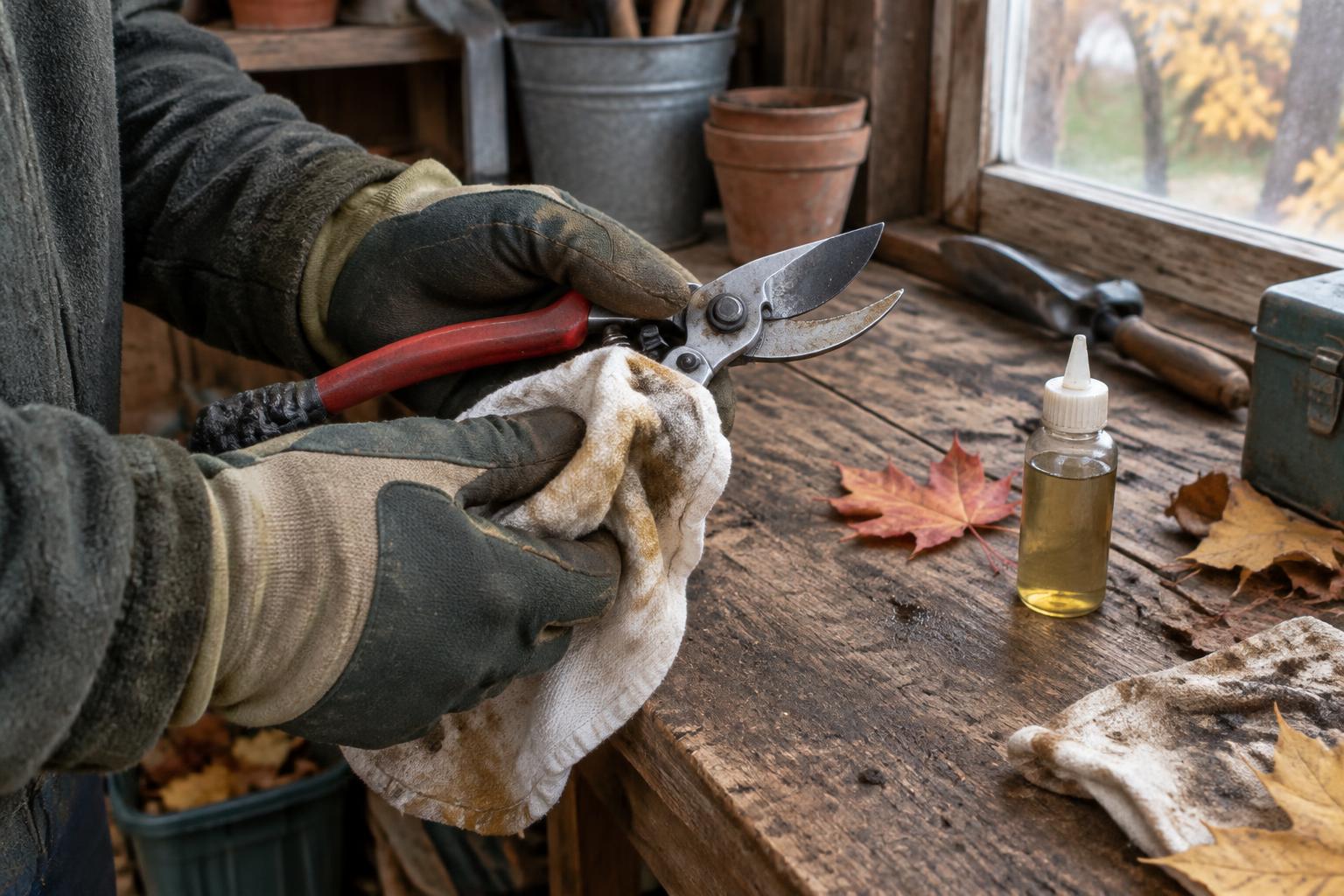
Sap, soil and moisture are what rust blades over the winter. Clean, sharpen and oil each tool now and it will cut cleanly from the first spring prune.
- Scrub off sap and soil with warm soapy water; use rubbing alcohol for stubborn sap.
- Dry thoroughly, then sharpen the bevelled edge with a file or whetstone.
- Wipe all metal with a light oil and work a drop into the pivot.
- Store closed and locked in a dry spot, off a concrete floor.
3. Shovels, Rakes and Long-Handle Tools
- Knock off caked soil and wire-brush any rust spots.
- Sand rough wooden handles and rub in linseed oil to prevent splitting.
- Hang tools on a wall rack so blades stay dry and edges stay sharp.
4. Wheelbarrows and Garden Carts
Empty and rinse the tray, let it dry, then store it upright or tray-down under cover so snow and meltwater can't pool. Poly trays can become brittle in deep cold, so avoid loading them heavily when frozen. Touch up chips on steel trays and check tire pressure before storage.
5. Garden Beds and Perennials
Clean up selectively
Pull spent annuals and remove diseased foliage (tomatoes, squash, peonies with mildew) so problems don't overwinter. Leave healthy stems and seed heads — they catch snow, which is excellent insulation.
Mulch after the first hard frost
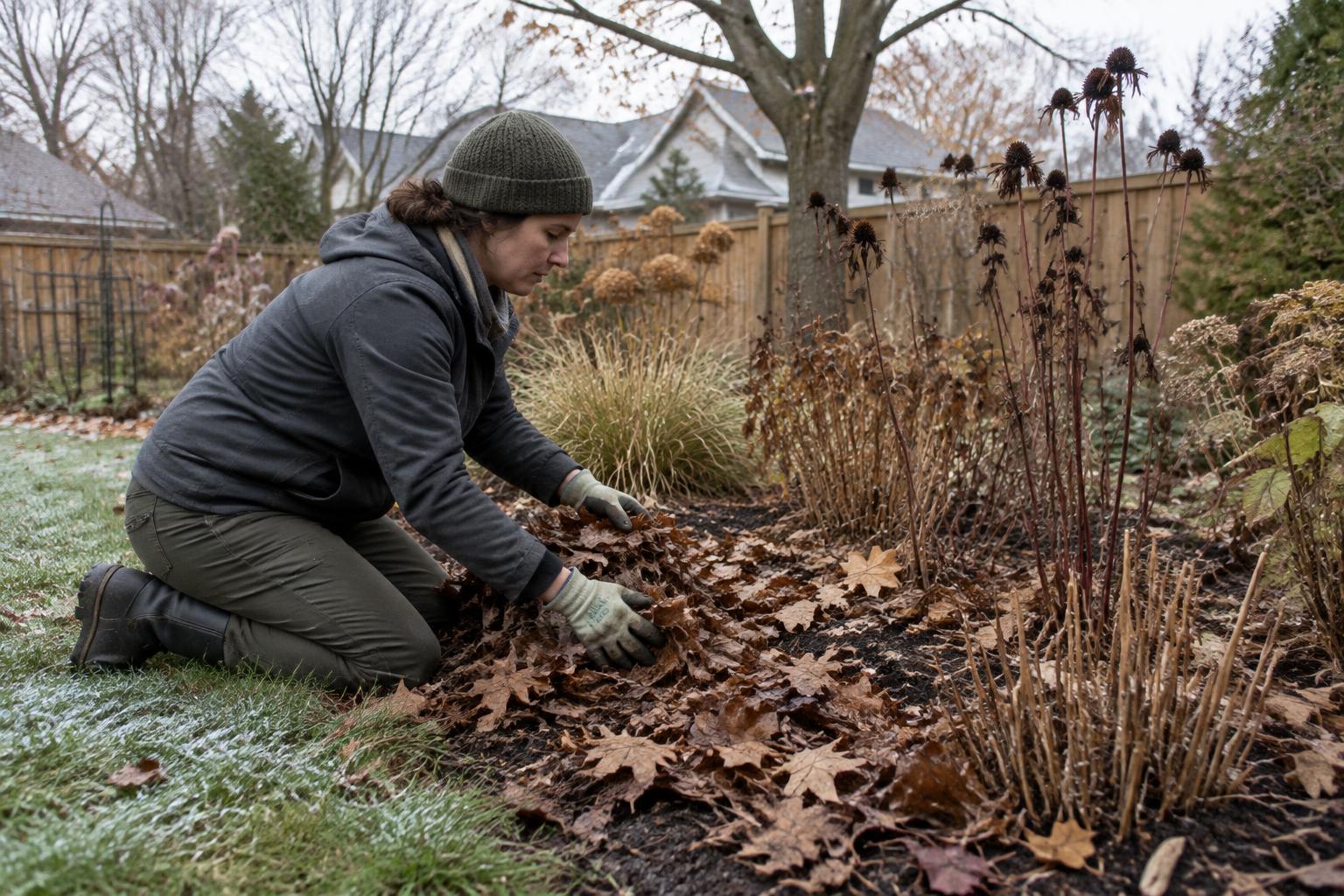
Spread 5–10 cm of shredded leaves, straw or compost over beds once the soil begins to freeze. Mulching too early invites rodents to nest; mulching on time keeps roots evenly frozen and prevents heaving.
Protect young shrubs and roses
Wrap tender shrubs in burlap against wind and road salt, and mound soil or mulch around the base of roses. Guard young tree trunks with spiral wraps or hardware cloth to stop rabbits and voles chewing bark under the snow.
Pre-Freeze Checklist
- Hoses drained, coiled and stored indoors.
- Outdoor taps shut off inside and drained.
- Nozzles, sprinklers and fittings brought in.
- Pruners and shears cleaned, sharpened and oiled.
- Long-handle tools cleaned and hung up.
- Wheelbarrow emptied and stored under cover.
- Beds cleaned of diseased plants, then mulched.
- Tree trunks guarded against rodents.
Frequently Asked Questions
When should I winterize my garden in Canada?
Start after the first light frosts and finish before the ground freezes hard — usually mid-October to early November in most of southern Canada, and late September to mid-October on the Prairies and in northern regions.
Can I leave my garden hose outside over winter?
It's best not to. Water left inside a hose expands as it freezes and can split the inner tube and crack fittings. Drain it fully, coil it loosely and store it in a shed, garage or basement.
How do I winterize an outdoor tap?
Disconnect the hose, shut off the interior valve that feeds the outdoor tap, then open the outside tap to let remaining water drain. Frost-free sillcocks still need the hose removed to drain properly.
How should I store pruners and shears for winter?
Clean off sap and soil, sharpen the blade, wipe all metal with a light coat of oil and store the tool closed in a dry place. This prevents rust and leaves them ready for spring pruning.
Should I cut back perennials in the fall?
Not always. Leaving sturdy stems and seed heads standing helps trap insulating snow and shelters beneficial insects. Cut back diseased or floppy plants, and mulch tender perennials after the ground starts to freeze.
What do I do with fallen leaves?
Rake them onto beds as mulch, shred them with a mower, or add them to the compost. A layer of chopped leaves protects roots from freeze-thaw cycles and feeds the soil as it breaks down.
Holland Greenhouse has supplied Canadian garden centres since 1988. Browse our watering products, cutting tools and wheelbarrows, and use our store locator to find a retailer near you.