
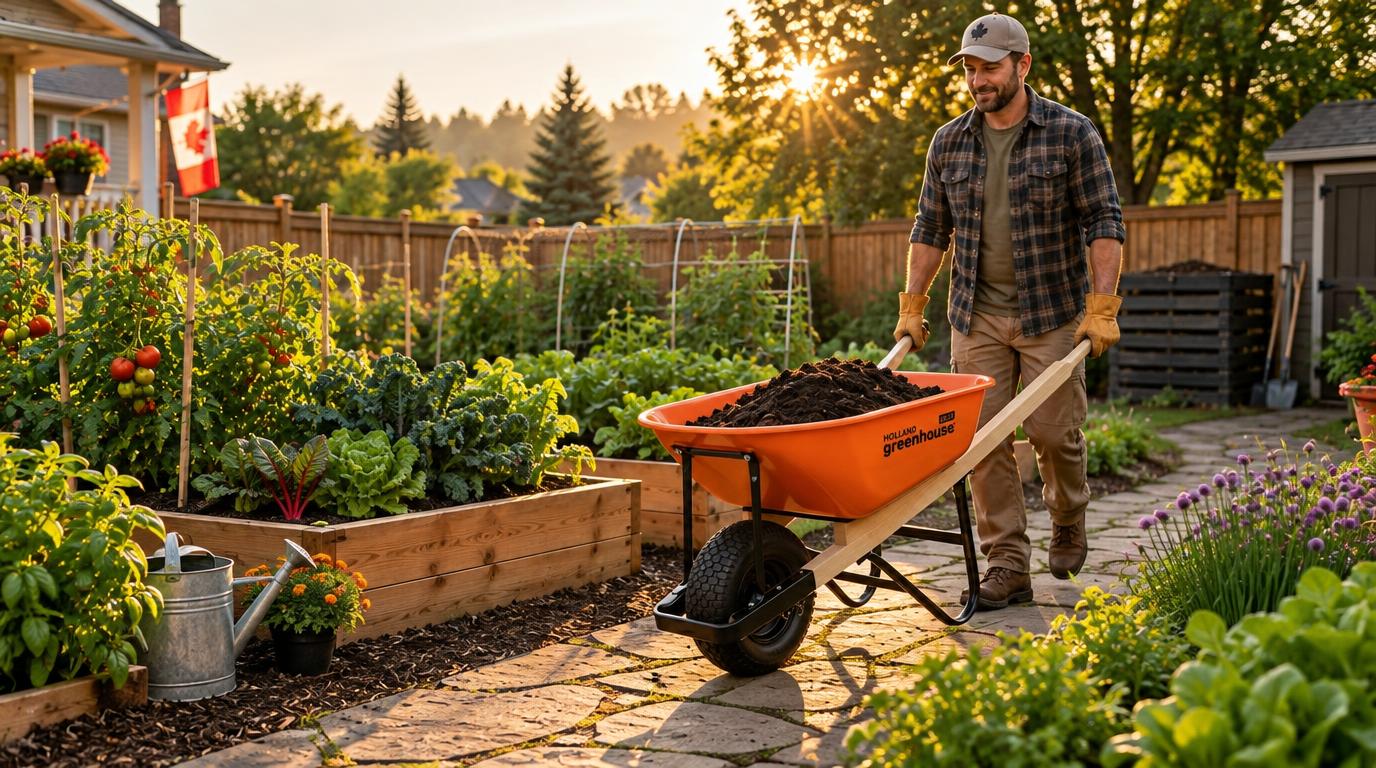
Spring cleanup, a new garden bed, a load of mulch, a winter's worth of firewood — almost every big yard job in Canada eventually comes down to moving heavy stuff from one place to another. The right wheelbarrow or garden cart makes that work faster and much easier on your back.
This guide explains the choices that actually matter: tray material, capacity, wheel setup, tires and handles, plus when a four-wheel garden cart is the smarter buy.
Start With the Job
- Gardening — compost, potting mix, plants, leaves and weeds. Light to medium loads, frequent dumping.
- Landscaping — soil, sod, mulch, gravel and stone. Heavy, dense loads over rough ground.
- Property and acreage — firewood, cleanup debris and long hauls across lawns and trails.
- Carrying, not dumping — flats of plants, bags, tools and kids' projects. A garden cart often fits better.
Poly vs. Steel Trays
Poly Tray Wheelbarrows
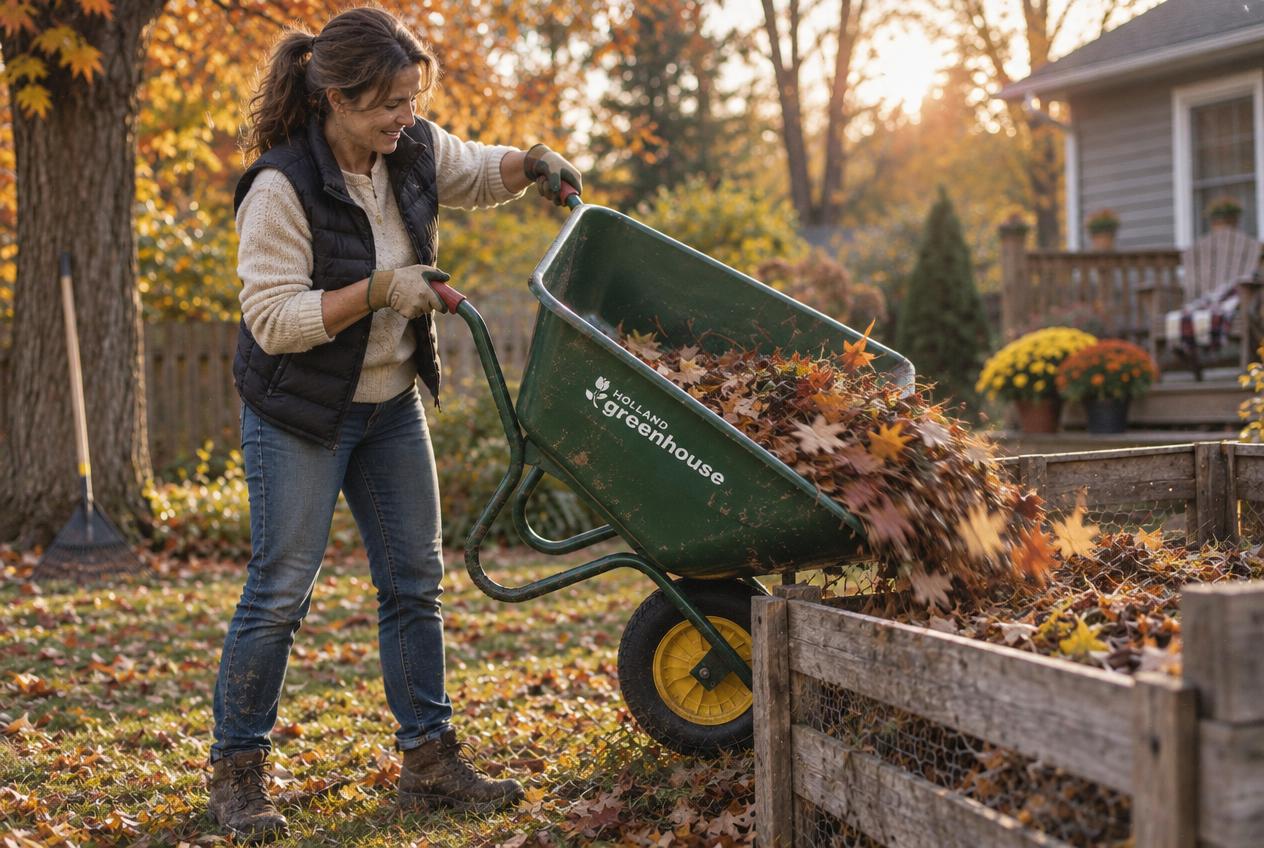
Poly trays are light, rust-proof and dent-resistant. They are easy to lift, easy to dump and rinse clean in seconds, and they don't corrode when left out in the rain. For most home gardeners, a poly tray is the most comfortable choice.
Steel Tray Wheelbarrows
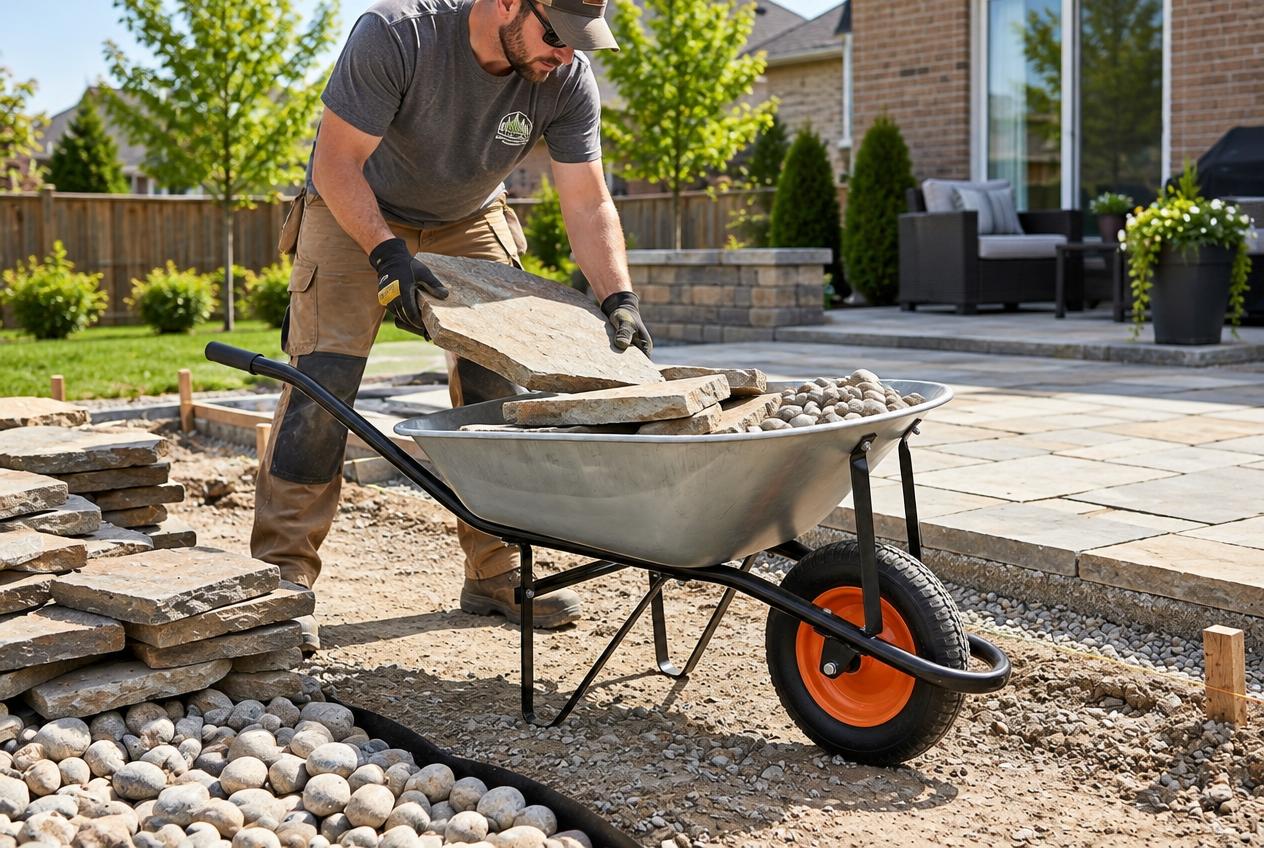
Steel trays take the abuse of gravel, brick, broken concrete and frozen ground. They resist punctures and sharp edges and hold their shape under heavy loads. Choose a powder-coated or galvanized finish and touch up chips to keep rust away.
| Tray | Strengths | Trade-offs | Best for |
|---|---|---|---|
| Poly | Light, rust-proof, easy to clean | Less suited to sharp, very heavy loads | Gardening, mulch, compost, yard waste |
| Steel | Tough, puncture-resistant, rigid | Heavier; can rust if chipped | Gravel, stone, concrete, landscaping |
Choosing a Capacity
| Size | Typical use |
|---|---|
| 5 cu. ft. | Small yards, raised beds, balconies, lighter users |
| 6 cu. ft. | The all-round choice for most Canadian homeowners |
| 7 cu. ft.+ | Landscaping, acreages, contractor and construction work |
Bigger isn't always better. A full 7 cu. ft. tray of wet soil can weigh several hundred pounds. Buy the size you can comfortably control when it's full.
One Wheel or Two?
A single front wheel steers precisely along narrow garden paths and between beds, and it makes tipping a load easy. Two wheels spread the weight and stop the barrow from rolling sideways — a big advantage on slopes, soft lawns and with heavy loads.
Tires: Pneumatic vs. Flat-Free
- Pneumatic (air-filled) — a smooth, cushioned ride over roots, rocks and soft ground. Check the pressure each spring.
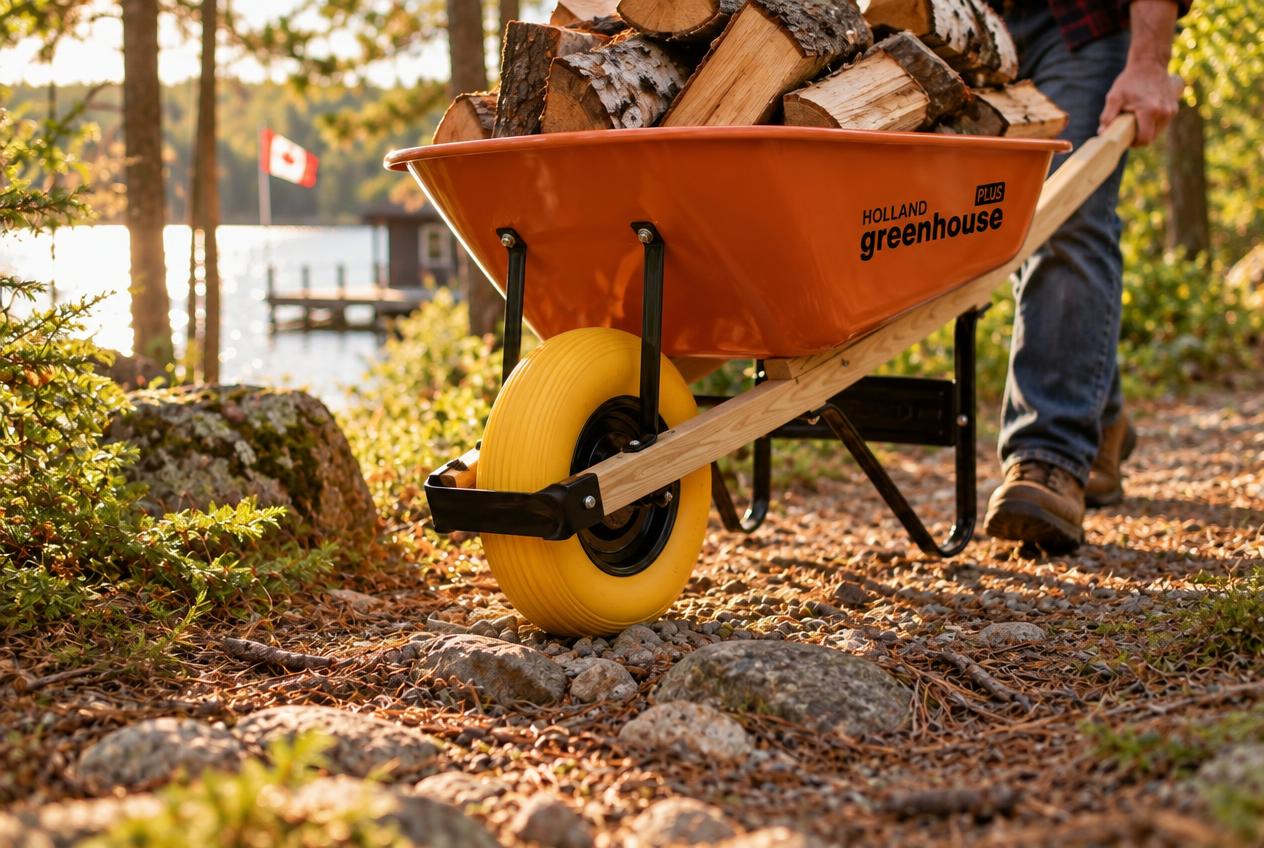
- Flat-free — never needs air and never goes flat. Ideal around thorns, nails and construction debris, or for barrows that sit unused for weeks.
- Knobby tread grips mud and wet grass; turf tread is gentler on lawns.
Handles and Comfort
Hardwood handles are classic, strong and comfortable in cold hands; steel handles never rot or split. Look for cushioned grips and handles long enough that the load sits balanced over the wheel, not your arms.
When a Garden Cart Is the Better Choice
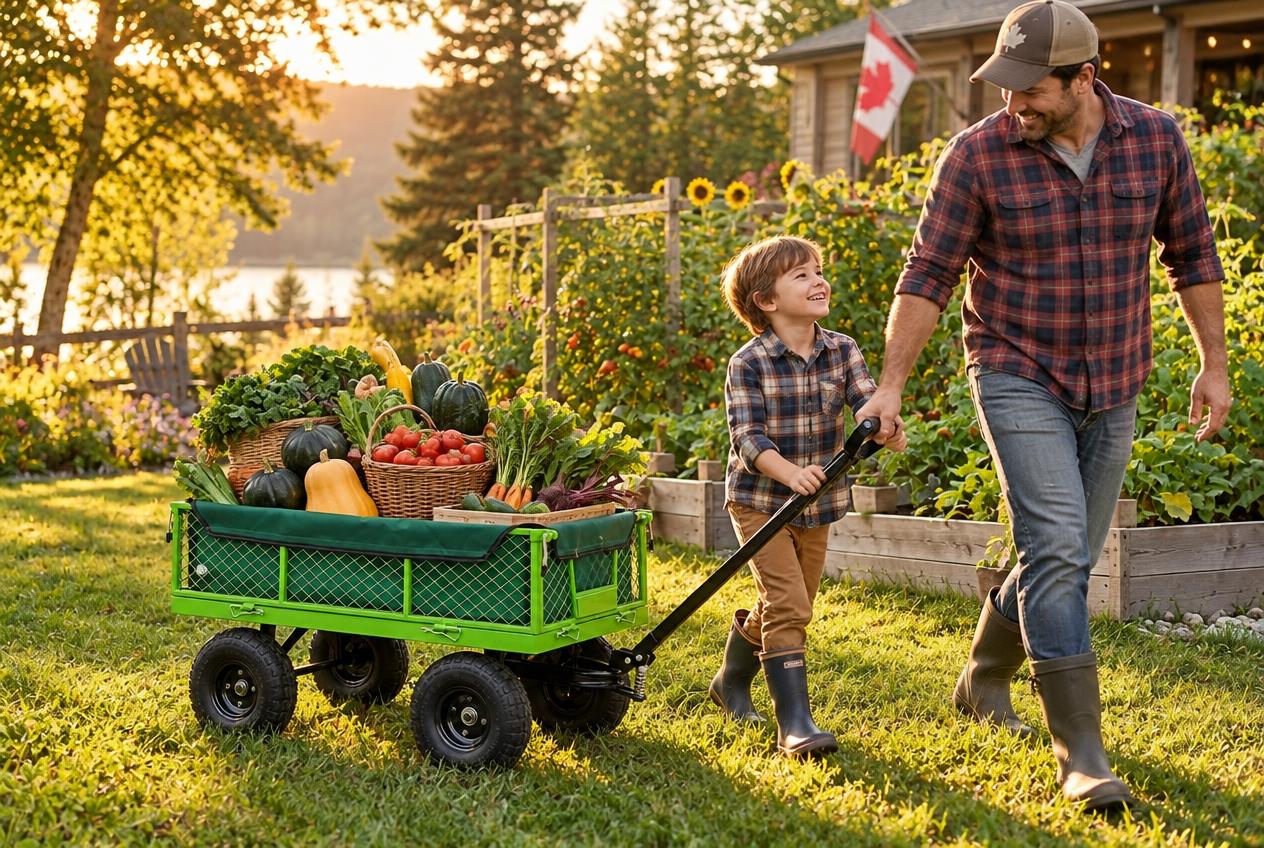
Four-wheel garden carts and wagons stay level on their own, so there's nothing to balance. They are perfect for carrying flats of plants, bags of soil, tools, potted flowers and harvest baskets. Dump carts add a tipping bed for bulk material like firewood and compost.
Care Through a Canadian Year
- Rinse the tray after concrete, fertilizer or manure loads.
- Store under cover, upright or tray-down, so snow and water don't collect.
- Check tire pressure and tighten bolts each spring.
- Touch up chips on steel trays to stop rust before it spreads.
- Replace a worn wheel or handle instead of the whole barrow.
Quick Buying Checklist
- Poly for gardening, steel for heavy landscaping.
- 6 cu. ft. for most homes; size up only if you can handle it full.
- Two wheels for stability, one wheel for manoeuvrability.
- Flat-free tires if punctures or long storage are likely.
- A four-wheel cart if you carry more than you dump.
Frequently Asked Questions
What size wheelbarrow should I buy?
For most Canadian homeowners a 6 cu. ft. wheelbarrow is the best all-round size. Choose 5 cu. ft. for small yards, raised beds and lighter users, and 7 cu. ft. or larger for landscaping, acreages and contractor work. Remember that a bigger tray full of wet soil or gravel quickly becomes heavier than most people can comfortably push.
Is a poly or steel wheelbarrow better?
Poly trays are lighter, never rust and are easy to clean, which makes them ideal for gardening, mulch, compost and yard waste. Steel trays handle sharp, heavy loads such as gravel, brick, stone and concrete better and resist punctures and heat. Gardeners usually prefer poly; landscapers and contractors usually prefer steel.
Should I get a one-wheel or two-wheel wheelbarrow?
A single wheel is more manoeuvrable on narrow paths and makes dumping easy. Two wheels are far more stable, so they suit heavy loads, uneven ground and anyone who finds balancing a full barrow difficult. If you have a bad back or move a lot of soil, a dual-wheel barrow is worth considering.
Are flat-free wheelbarrow tires worth it?
Yes, if your barrow sits for long periods or you work around thorns, nails, roofing debris or construction sites. Flat-free tires never need air and never go flat. Pneumatic (air-filled) tires give a smoother, more cushioned ride on rough or soft ground but need occasional topping up.
What is the difference between a wheelbarrow and a garden cart?
A wheelbarrow has one or two wheels at the front and is lifted and balanced by the handles; it dumps loads easily. A garden cart or wagon has four wheels, stays level on its own and is pulled by a handle, making it better for carrying flats of plants, bags, tools and awkward items without lifting.
How do I store a wheelbarrow over a Canadian winter?
Empty and rinse the tray, let it dry, and store it upright or tray-down under cover so snow and water don't collect. Check tire pressure, tighten bolts and touch up any chips in steel trays to prevent rust. A dry shed or garage adds years to any barrow.
Holland Greenhouse has supplied Canadian garden centres and retailers since 1988. Browse our wheelbarrows and garden carts, pair them with the right long-handle garden tools, and use our store locator to find a retailer near you.