
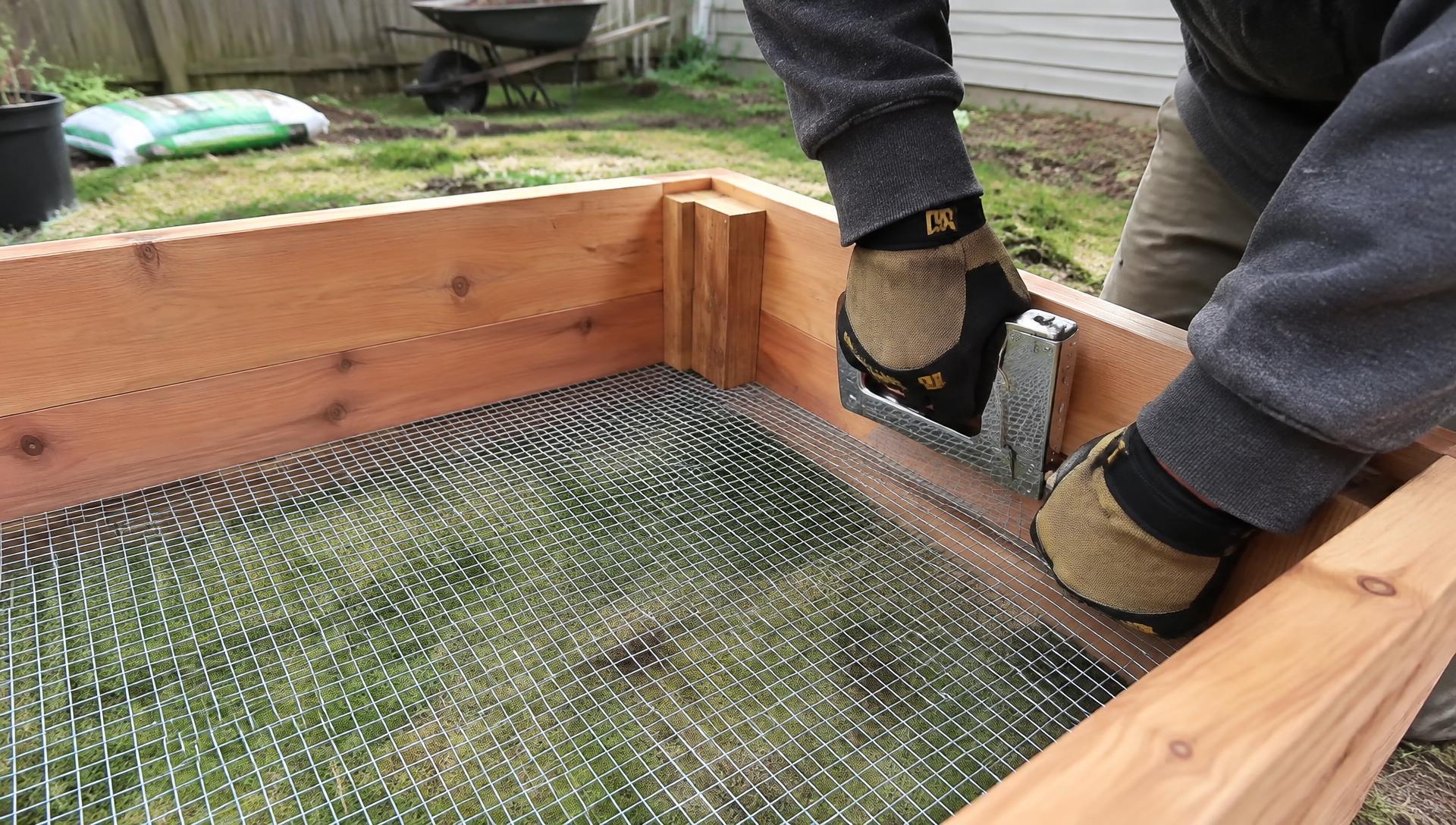
Raised beds solve a lot of problems — poor soil, drainage, sore backs — but they can turn into a buffet for burrowing pests. Across Canada, voles, moles, pocket gophers and ground squirrels tunnel up from underneath and eat roots, bulbs and carrots before you notice anything wrong.
The fix is simple and permanent: a layer of hardware cloth across the bottom of the bed.
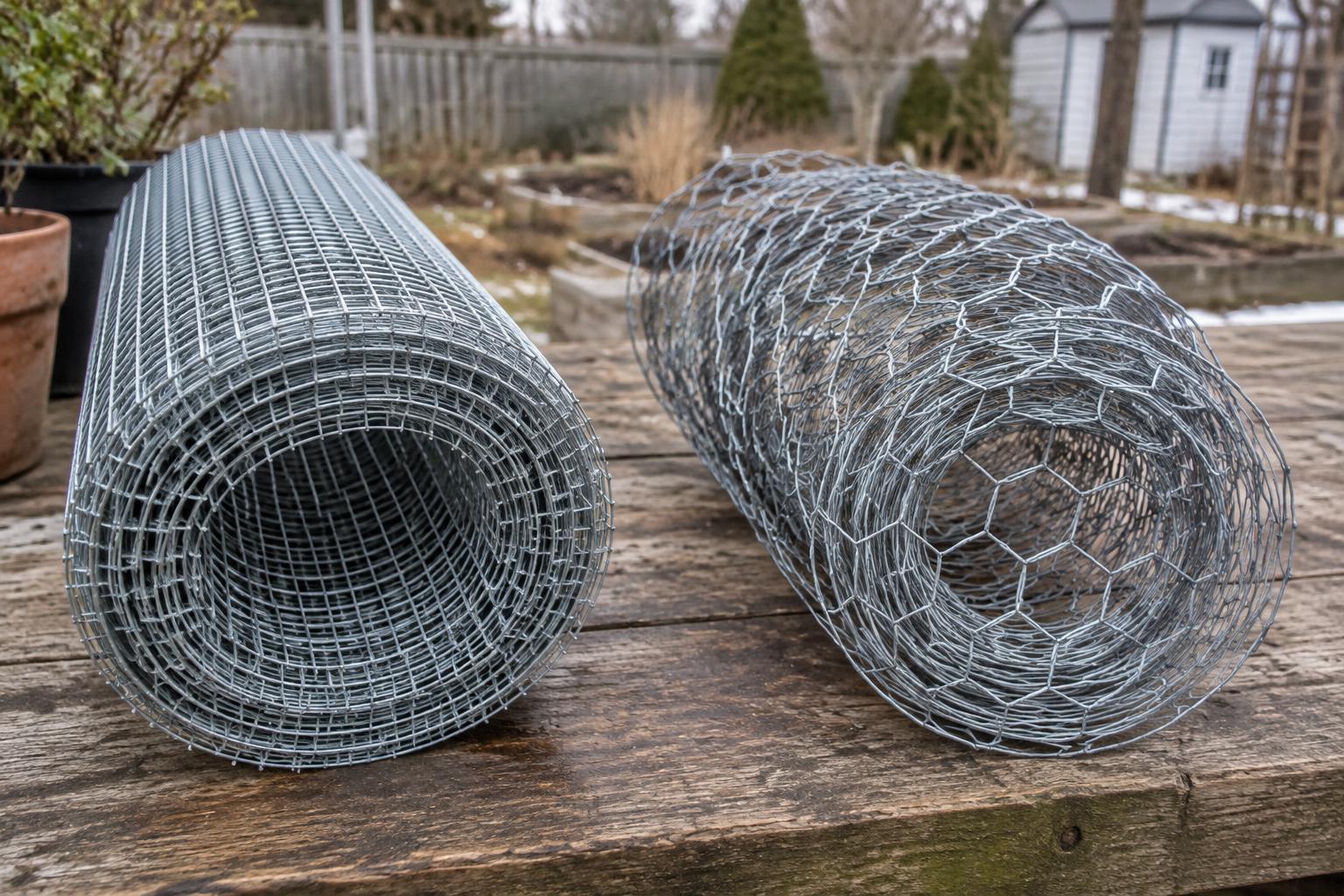
Hardware Cloth vs. Chicken Wire
| Hardware cloth | Chicken wire | |
|---|---|---|
| Openings | Small squares (1/4″ or 1/2″) | Large hexagons (about 1″) |
| Strength | Stiff, heavier wire | Thin, flexible wire |
| Stops burrowing rodents | Yes | Often not — voles slip through |
| Lifespan in soil | Many years (galvanized) | Shorter; rusts and tears |
| Best use | Bed bottoms, cloches, tree guards | Fencing poultry, light barriers |
Choosing the Right Mesh Size
| Mesh | Stops | Best for |
|---|---|---|
| 1/2″ | Voles, moles, gophers, ground squirrels, rabbits | Raised bed bottoms — the all-round choice |
| 1/4″ | Mice and very small rodents | Bulb beds, seedling cloches, compost bins |
Look for galvanized steel. Zinc coating resists rust in damp spring soil, and galvanized-after-weld mesh lasts longest.
What You'll Need
- Galvanized hardware cloth, cut 15–20 cm wider than the bed in each direction
- Heavy-duty staple gun and 1/2″ staples (or roofing nails / screws with washers)
- Tin snips or aviation snips
- Work gloves — cut wire edges are sharp
- Tape measure and a flat-blade shovel
How to Install Hardware Cloth in a Raised Bed
New bed
- Level the ground and remove sod where the bed will sit.
- Build the frame and set it in place.
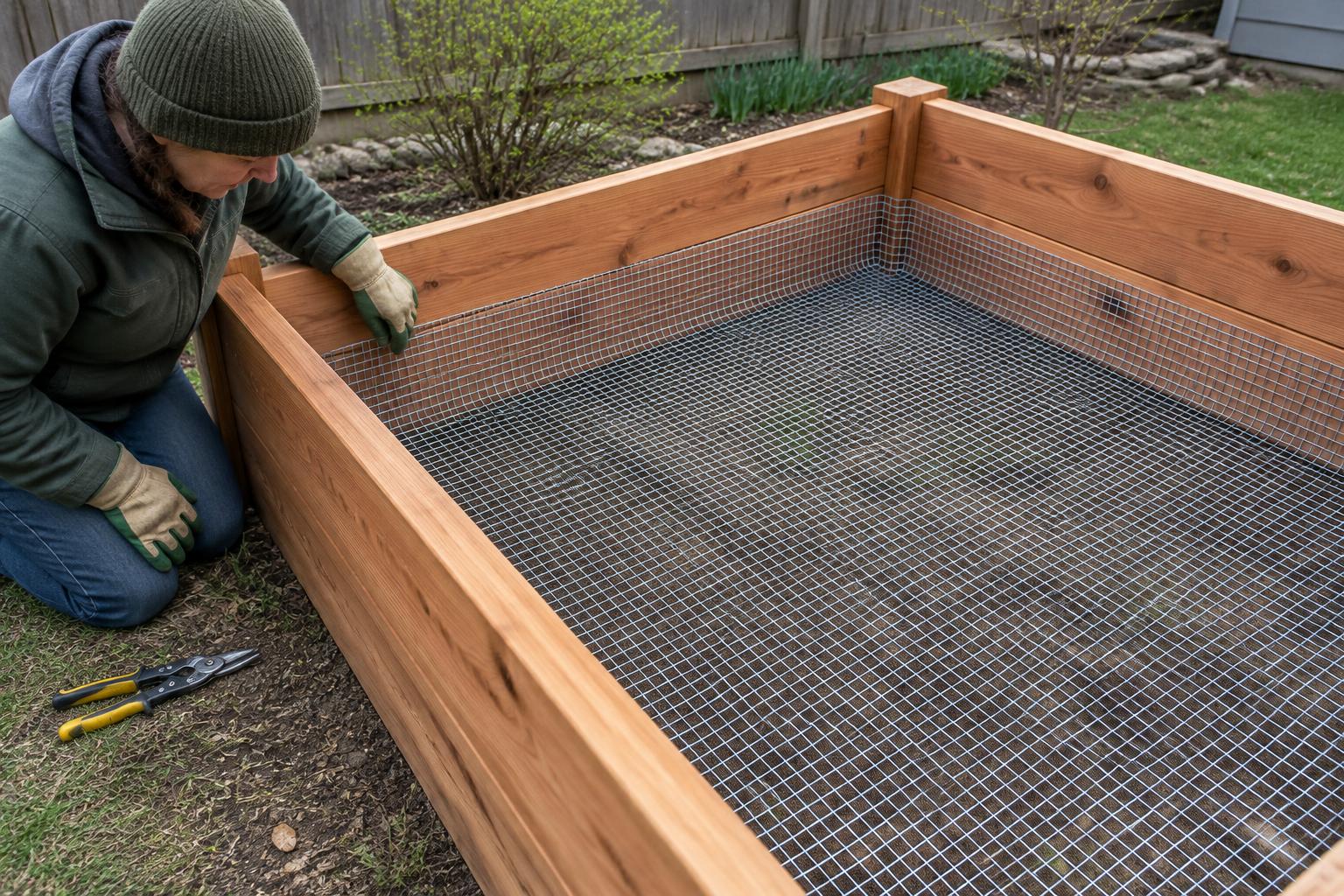
- Roll the mesh across the bottom, overlapping strips by at least 10 cm.
- Bend the edges 10–15 cm up the inside walls so pests can't squeeze around the corners.
- Staple every 10–15 cm along the walls, then fill with soil.
Existing bed
Shovel the soil onto a tarp, lay and staple the mesh as above, then refill. Fall cleanup or early spring is the easiest time, when the bed is empty.
Beyond the Bed Bottom
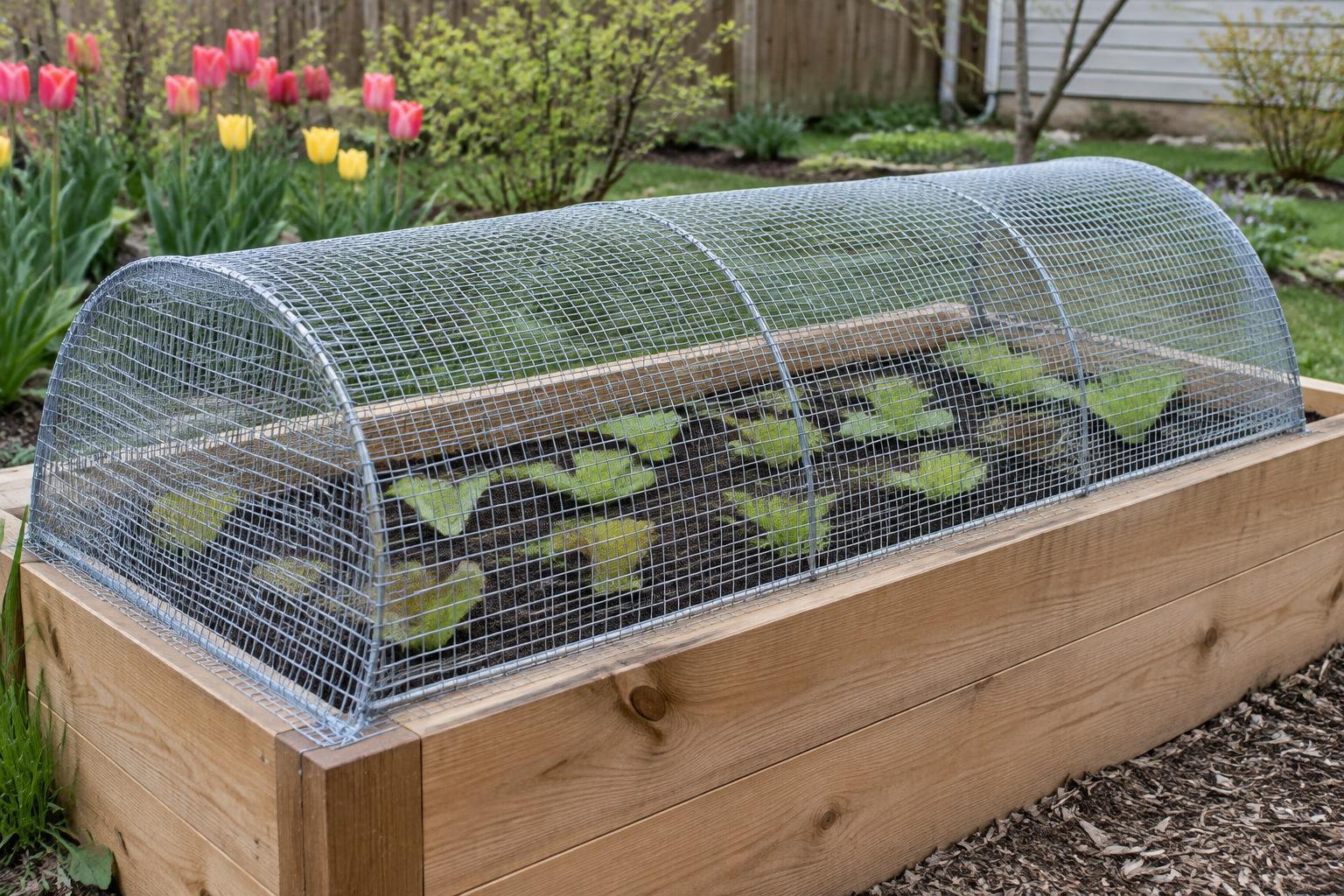
- Cloches — bend a sheet of mesh into a tunnel over seedlings to stop rabbits and squirrels.
- Tree guards — wrap young trunks before winter to stop bark chewing under the snow.
- Bulb cages — line planting holes for tulips and crocuses.
- Compost bins — keep rodents out of food scraps.
Frequently Asked Questions
What is hardware cloth?
Hardware cloth is a woven or welded wire mesh, usually galvanized steel, with small square openings such as 1/4 inch or 1/2 inch. Unlike chicken wire it is stiff and strong, so it stops burrowing and chewing pests.
Is hardware cloth better than chicken wire for raised beds?
Yes. Chicken wire has large hexagonal holes and thin wire that voles, mice and determined moles can get through or chew. Hardware cloth's small openings and heavier wire keep them out for many seasons.
What size hardware cloth should I use?
1/2 inch mesh is the best all-round choice for raised bed bottoms — it stops voles, moles, gophers and ground squirrels while letting roots, water and worms pass. Use 1/4 inch where mice or very small rodents are a problem.
Will hardware cloth block drainage or earthworms?
No. Water drains freely through the mesh, and earthworms easily move through 1/2 inch openings. Roots can also grow down through it into the native soil.
Does galvanized hardware cloth rust?
Galvanized mesh is coated in zinc to resist rust and typically lasts many years in soil. Choose galvanized-after-weld mesh for the best protection in wet Canadian springs.
Can I add hardware cloth to an existing raised bed?
Yes. Dig out the soil, lay the mesh across the bottom so it runs a few inches up the inside walls, staple it in place and refill. It's easiest to do in early spring or fall when the bed is empty.
Holland Greenhouse has supplied Canadian garden centres since 1988. See our full range of wire mesh and hardware cloth, and use our store locator to find a retailer near you.